“Where’s the Pumpernickel?” ACT’S Laughter on the 23rd Floor

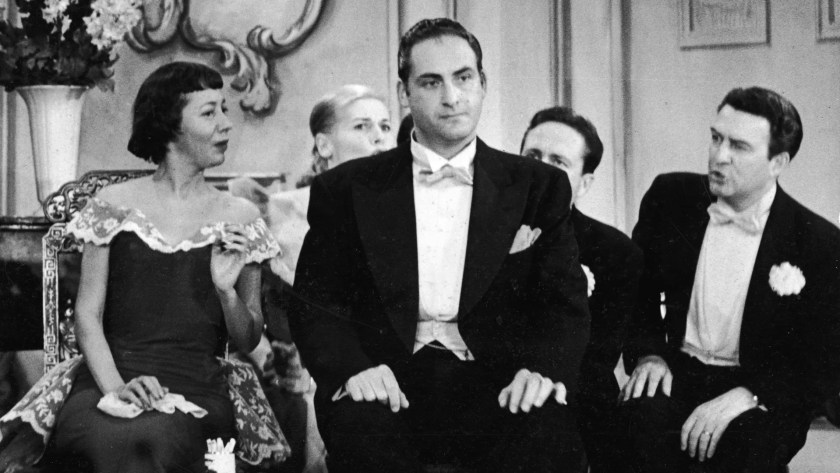
Imogene Coca and Sid Caesar: Your Show of Shows: 1950

Your Show of Shows forever shines in the canon of television comedy. From 1950 to 1954 this ingenious, sharp variety show featured Sid Caesar and Imogene Coca, et al, in sketches, inspired and silly. When you have writers at the top of their game (Woody Allen, Mel Brooks, Carl Reiner, Neil Simon, to name a few) preposterous works just fine.  For more than 40 years Saturday Night Live has been thriving. It’s easy when nothing else is airing. Gilbert Gottfried observed that: “…it’s not a matter of bad or good, but which restaurant has the best view.”  By comparison the 4 year run of Your Show of Shows was criminal.

Max Prince (Alex Eding) is the frantic, tempestous star of the TV show. Lucas (Owen Wildoner) is the narrator and new hire. He embraces apprenticeship with conviviality and grace. The writers include Milt, Val, Brian, Kenny, Carol and Helen, the only women on staff. Milt (Brian Hoffman) is the raffish class clown, always on, cracking wise no matter how insensitive. Val (Eddy Herring) is the long-suffering, pious head of the team, and a favorite target of Milt. Brian (Joe Barr) always has a pending deal with Hollywood. Ira (Kenneth Fulenwilder) arrives late, each day,with a new, potentially fatal ailment. Kenny’s (Christian Black)  not as bombastic as the others, but his dry wit delivers. Carol (Molly Bowers) is the only woman at this playground. It’s a lonely struggle, but she’s welcome and respected, and persists. Helen (Hanna Mancuso) is the front desk assistant, running interference and keeping track of the crazy-making demands.

Laughter on the 23rd Floor begins in the 3rd year, when the suits upstairs are wavering on budget, timeslots and payroll. The writers possess a keen sense of chemistry and timing, when it comes to punchlines and a fine sense of the ridiculous. Each brings their particular gift to the script, when they’re not digressing. Seems these professionals love to aim potshots at each other. The atmosphere is boisterous and edgy. Playwright Neil Simon has no problem with material that’s disparaging, crass, tone-deaf and gobsmacking. One delight of Laughter on the 23rd Floor is its resistance to loftiness and propriety. Intelligent without being pretentious. There’s genuine pathos, there’s rumination and reflection crucial to Simon’s structure and upshot.

Director Leigh Wyatt Moore met this frantic juggling act, this zoo on wheels, with panache and sophistication. As many of you know, comedies are far more difficult, more challenging than drama. The mood-swings, the double-takes, the spitshots, the grotesquely tasteless hilarity. It must be like staving off tigers with a slingshot. Yet Moore carries it off beautifully, without a hitch. The performers fit together with familiarity, inhabiting roles comfortably. They are dedicated, nimble, intuitive. We’re invited to their boisterous, deadpan conflagration, and you’ll be glad you came.

Allen Contemporary Theatre presents: Laughter On the 23rd Floor, playing August 14-30th, 2026. 1210 E Main Street, #300, Allen, TX, United States, 75002. (844) 822-8849 allencontemporarytheatre.net

Core Theatre’a poignant, sublime Tennessee Wet Rub

Hank and Bertha have shared a home for years. A barbecue shack with bedrooms in back. Though they’re married, they have no children. The menu offers a generous meal for five dollars or less. As Tennessee Wet Rub opens, their lanterns are lit fot the blizzard, that’s taken the electricity. Bertha, well versed in scripture, is certain end days are imminent, though Hank reassures. Their place is isolated, so a knock at the door is alarming. Turns out to be a stranger, Arleta, a teenager carrying a doll. She’s soft spoken, frightened, not at all worldly. She explains Dunk, her fiance’ is right behind. Their car is stuck in a ditch. Dunk is African American.

Bertha and Hank are up in an uproar. They can’t believe a man with honorable intentions would be engaged to this young girl. Certainly not a black man. They’re convinced something’s off-kilter, something they’re not being told. Gradually, Dunk’s impeccable manners, his respectful tone, and Christian upbringing, eases Hank and Bertha’s suspicions. When Dunk and Hank debate wet versus dry rub, they settle it on the kitchen battlefield.

Tennessee Wet Rub, is a keen and masterful stroke. Playwright Kim E. Ruyle writes characters that are detailed, nuanced, and ultimately, goodhearted. You can tell Bertha and Hank are struggling with assumptions, and basically, no compass. This being said, Ruyle is never condescending, or didactic. There’s no moment of epiphany, no lectures. When Vern, the deputy, flies of the handle, Hank stands up for Dunk. He tries to reason but wisdom doesn’t prevail. Again, we see Ruyle’s dedication to virtuosity over homilies. (Though, personally, I would have preferred a different ending, I’m probably more naive than Arleta.) Manipulate, the audience won’t believe you.

As so often is the case, The Core Theatre takes on difficult content (Twelve Angry Jurors, Inferno, To Kill a Mockingbird) with confidence and authority. Director James Prince (who wears many hats) has used each actor to best effect. Joseph Figuerias plays the convivial, stalwart (if hotheaded) Vern. Ariana Hope’s Arleta elicits sympathy and protectiveness, frail but basically steady. Justice Williams as Dunk, is admirable, intelligent, never pompous. Never defensive or angry. Ivy Opdyke and Matt Gunther are Bertha and Hank, the affectionate, if sometimes contentious, married couple. They capture the somber undertone that informs Tennessee Wet Rub, with veracity and familiarity. Opdyke’s Bertha is pious but not unkind. She won’t let Hank push her around. Gunther’s Hank is grounded in the actual. He’s strong-willed, and also easy-going.

Tennessee Wet Rub is volatile, absorbing theatre.  Genuine and deeply moving.

The Core Theatre presents Tennessee Wet Rub, playing August 7th-30th, 206. 518 West Arapaho Road, Suite 115, Richardson, Texas 75080. (214) 930-5338. james@thecoretheatre.org


Core Theatre’s poignant, sublime Tennessee Wet Rub

Hank and Bertha have shared a home for years. A barbecue shack with bedrooms in back. Though they’re married, they have no children. The menu offers a generous meal for five dollars or less. As Tennessee Wet Rub opens, their lanterns are lit fot the blizzard, that’s taken the electricity. Bertha, well versed in scripture, is certain end days are imminent, though Hank reassures. Their place is isolated, so a knock at the door is alarming. Turns out to be a stranger, Arleta, a teenager carrying a doll. She’s soft spoken, frightened, not at all worldly. She explains Dunk, her fiance’ is right behind. Their car is stuck in a ditch. Dunk is African American.

Bertha and Hank are up in an uproar. They can’t believe a man with honorable intentions would be engaged to this young girl. Certainly not a black man. They’re convinced something’s off-kilter, something they’re not being told. Gradually, Dunk’s impeccable manners, his respectful tone, and Christian upbringing, eases Hank and Bertha’s suspicions. When Dunk and Hank debate wet versus dry rub, they settle it on the kitchen battlefield.

Tennessee Wet Rub, is a keen and masterful stroke. Playwright Kim E. Ruyle writes characters that are detailed, nuanced, and ultimately, goodhearted. You can tell Bertha and Hank are struggling with assumptions, and basically, no compass. This being said, Ruyle is never condescending, or didactic. There’s no moment of epiphany, no lectures. When Vern, the deputy, flies of the handle, Hank stands up for Dunk. He tries to reason but wisdom doesn’t prevail. Again, we see Ruyle’s dedication to virtuosity over homilies. (Though, personally, I would have preferred a different ending, I’m probably more naive than Arleta.) Manipulate, the audience won’t believe you.

As so often is the case, The Core Theatre takes on difficult content (Twelve Angry Jurors, Inferno, To Kill a Mockingbird) with confidence and authority. Director James Prince (who wears many hats) has used each actor to best effect. Joseph Figuerias plays the convivial, stalwart (if hotheaded) Vern. Ariana Hope’s Arleta elicits sympathy and protectiveness, frail but basically steady. Justice Williams as Dunk, is admirable, intelligent, never pompous. Never defensive or angry. Ivy Opdyke and Matt Gunther are Bertha and Hank, the affectionate, if sometimes contentious, married couple. They capture the somber undertone that informs Tennessee Wet Rub, with veracity and familiarity. Opdyke’s Bertha is pious but not unkind. She won’t let Hank push her around. Gunther’s Hank is grounded in the actual. He’s strong-willed, and also easy-going.

Tennessee Wet Rub is volatile, absorbing theatre.  Genuine and deeply moving.

The Core Theatre presents Tennessee Wet Rub, playing August 7th-30th, 206. 518 West Arapaho Road, Suite 115, Richardson, Texas 75080. (214) 930-5338.  james@thecoretheatre.org


Core Theatre’s poignant, sublime Tennessee Wet Rub


Hank and Bertha have shared a home for years. A barbecue shack with bedrooms in back. Though they’re married, they have no children. The menu offers a generous meal for five dollars or less. As Tennessee Wet Rub opens, their lanterns are lit fot the blizzard, that’s taken the electricity. Bertha, well versed in scripture, is certain end days are imminent, though Hank reassures. Their place is isolated, so a knock at the door is alarming. Turns out to be a stranger, Arleta, a teenager carrying a doll. She’s soft spoken, frightened, not at all worldly. She explains Dunk, her fiance’ is right behind. Their car is stuck in a ditch. Dunk is African American.

Bertha and Hank are up in an uproar. They can’t believe a man with honorable intentions would be engaged to this young girl. Certainly not a black man. They’re convinced something’s off-kilter, something they’re not being told. Gradually, Dunk’s impeccable manners, his respectful tone, and Christian upbringing, eases Hank and Bertha’s suspicions. When Dunk and Hank debate wet versus dry rub, they settle it on the kitchen battlefield.

Tennessee Wet Rub, is a keen and masterful stroke. Playwright Kim E. Ruyle writes characters that are detailed, nuanced, and ultimately, goodhearted. You can tell Bertha and Hank are struggling with assumptions, and basically, no compass. This being said, Ruyle is never condescending, or didactic. There’s no moment of epiphany, no lectures. When Vern, the deputy, flies of the handle, Hank stands up for Dunk. He tries to reason but wisdom doesn’t prevail. Again, we see Ruyle’s dedication to virtuosity over homilies. (Though, personally, I would have preferred a different ending, I’m probably more naive than Arleta.) Manipulate, the audience won’t believe you.

As so often is the case, The Core Theatre takes on difficult content (Twelve Angry Jurors, Inferno, To Kill a Mockingbird) with confidence and authority. Director James Prince (who wears many hats) has used each actor to best effect. Joseph Figuerias plays the convivial, stalwart (if hotheaded) Vern. Ariana Hope’s Arleta elicits sympathy and protectiveness, frail but basically steady. Justice Williams as Dunk, is admirable, intelligent, never pompous. Never defensive or angry. Ivy Opdyke and Matt Gunther are Bertha and Hank, the affectionate, if sometimes contentious, married couple. They capture the somber undertone that informs Tennessee Wet Rub, with veracity and familiarity. Opdyke’s Bertha is pious but not unkind. She won’t let Hank push her around. Gunther’s Hank is grounded in the actual. He’s strong-willed, and also easy-going.

Tennessee Wet Rub is volatile, absorbing theatre.  Genuine and deeply moving.

The Core Theatre presents Tennessee Wet Rub, playing August 7th-30th, 206. 518 West Arapaho Road, Suite 115, Richardson, Texas 75080. (214) 930-5338. james@thecoretheatre.org


Core Theatre’s poignant, sublime Tennessee Wet Rub

Hank and Bertha have shared a home for years. A barbecue shack with bedrooms in back. Though they’re married, they have no children. The menu offers a generous meal for five dollars or less. As Tennessee Wet Rub opens, their lanterns are lit fot the blizzard, that’s taken the electricity. Bertha, well versed in scripture, is certain end days are imminent, though Hank reassures. Their place is isolated, so a knock at the door is alarming. Turns out to be a stranger, Arleta, a teenager carrying a doll. She’s soft spoken, frightened, not at all worldly. She explains Dunk, her fiance’ is right behind. Their car is stuck in a ditch. Dunk is African American.

Bertha and Hank are up in an uproar. They can’t believe a man with honorable intentions would be engaged to this young girl. Certainly not a black man. They’re convinced something’s off-kilter, something they’re not being told. Gradually, Dunk’s impeccable manners, his respectful tone, and Christian upbringing, eases Hank and Bertha’s suspicions. When Dunk and Hank debate wet versus dry rub, they settle it on the kitchen battlefield.

Tennessee Wet Rub, is a keen and masterful stroke. Playwright Kim E. Ruyle writes characters that are detailed, nuanced, and ultimately, goodhearted. You can tell Bertha and Hank are struggling with assumptions, and basically, no compass. This being said, Ruyle is never condescending, or didactic. There’s no moment of epiphany, no lectures. When Vern, the deputy, flies of the handle, Hank stands up for Dunk. He tries to reason but wisdom doesn’t prevail. Again, we see Ruyle’s dedication to virtuosity over homilies. (Though, personally, I would have preferred a different ending, I’m probably more naive than Arleta.) Manipulate, the audience won’t believe you.

As so often is the case, The Core Theatre takes on difficult content (Twelve Angry Jurors, Inferno, To Kill a Mockingbird) with confidence and authority. Director James Prince (who wears many hats) has used each actor to best effect. Joseph Figuerias plays the convivial, stalwart (if hotheaded) Vern. Ariana Hope’s Arleta elicits sympathy and protectiveness, frail but basically steady. Justice Williams as Dunk, is admirable, intelligent, never pompous. Never defensive or angry. Ivy Opdyke and Matt Gunther are Bertha and Hank, the affectionate, if sometimes contentious, married couple. They capture the somber undertone that informs Tennessee Wet Rub, with veracity and familiarity. Opdyke’s Bertha is pious but not unkind. She won’t let Hank push her around. Gunther’s Hank is grounded in the actual. He’s strong-willed, and also easy-going.

Tennessee Wet Rub is volatile, absorbing theatre.  Genuine and deeply moving.

The Core Theatre presents Tennessee Wet Rub, playing August 7th-30th, 206. 518 West Arapaho Road, Suite 115, Richardson, Texas 75080. (214) 930-5338. james@thecoretheatre.org